The Guardian
| Total Responses: | 96 |
| Average Quality Score: | 77.8 |
| Average Bias Score: | 4.0 |
| gen: 2026/10/12:02:48 in 23.7 sec (-3d)bias: 3 (Center) |
| type: newsquality: 68 |
| pts: 0 |

 | author: | Luke Harding | institution: | The Guardian | ¿porque no los dos? |
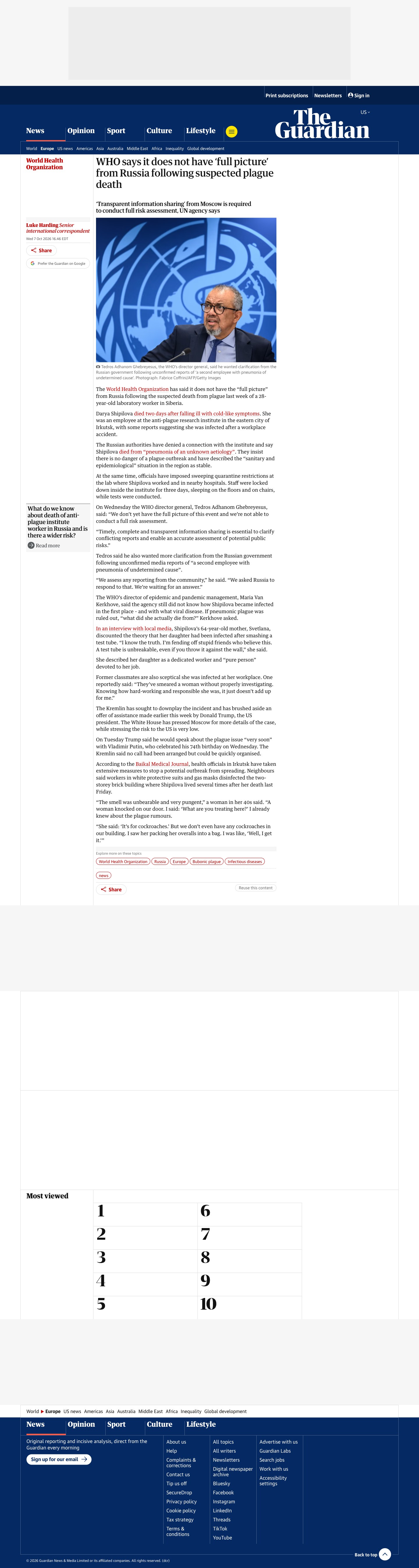
| tl;dr | The article reports that WHO wants more information from Russia about the death of a 28-year-old laboratory worker in Irkutsk amid suspicions of plague. Russian authorities attribute her death to pneumonia of unknown cause and deny an outbreak risk. WHO says incomplete information prevents a full risk assessment and seeks clarification about a possible second illness. The report contrasts official reassurances with reported quarantine and disinfection measures, while including relatives’ objections to the workplace-accident theory. Plague remains unconfirmed. | ||||
| deeper: | The report clearly labels plague as suspected and includes WHO statements, Russian denials, and relatives’ perspectives. Its emphasis on transparency and public health does not establish a partisan position. However, phrases such as “downplay” and “brushed aside,” plus a dramatic closing anecdote, encourage suspicion of Russian officials. Several important claims rely on secondhand reports without independent confirmation. Medical context is thin, and the reference to a “viral disease” is confusing because plague is bacterial. The screenshot alone cannot authenticate the reporting. | ||||
media: | |||||
| gen: 2026/10/12:02:45 in 21.5 sec (-3d)bias: 3 (Center-Left) |
| type: newsquality: 78 |
| pts: 0 |
 | author: | Kat Lay | institution: | The Guardian | ¿porque no los dos? |
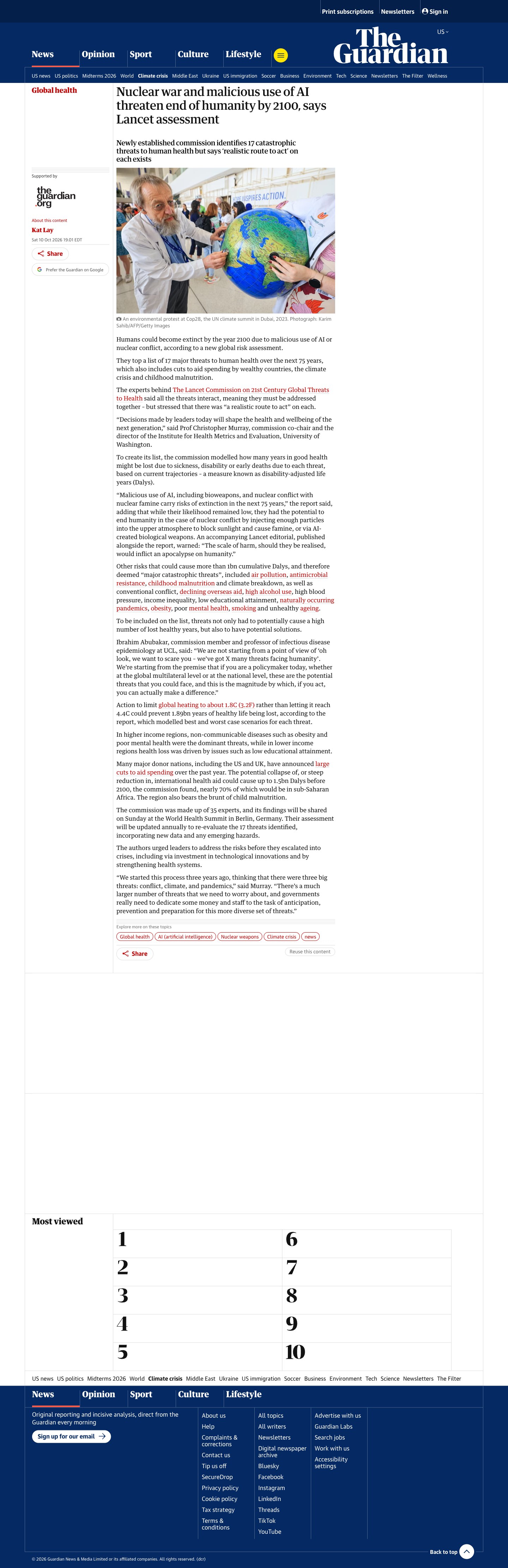
| tl;dr | A Lancet commission identifies 17 major threats to human health through 2100, including nuclear conflict, malicious AI use, climate change, malnutrition and declining health aid. Nuclear war and AI-enabled biological weapons pose low-probability extinction risks, while other threats could cost billions of healthy life-years. The commission argues that all identified risks have potential solutions and calls for coordinated prevention, stronger health systems, technological investment and government preparedness. | ||||
| deeper: | The article clearly attributes claims, names experts, explains the health-loss measure and acknowledges that extinction risks are unlikely. However, its alarming headline foregrounds the most extreme outcomes, and all quoted experts represent the commission rather than independent scrutiny. Its favorable emphasis on public investment, international aid and coordinated climate action gives it a mild center-left framing. Numerical projections add substance, but uncertainty ranges, modeling limitations and policy trade-offs receive little attention. | ||||
media: | |||||
| gen: 2026/10/10:22:52 in 23.0 sec (-5d)bias: 2 (Center) |
| type: newsquality: 74 |
| pts: 0 |
 | author: | Marina Dunbar | institution: | The Guardian | ¿porque no los dos? |
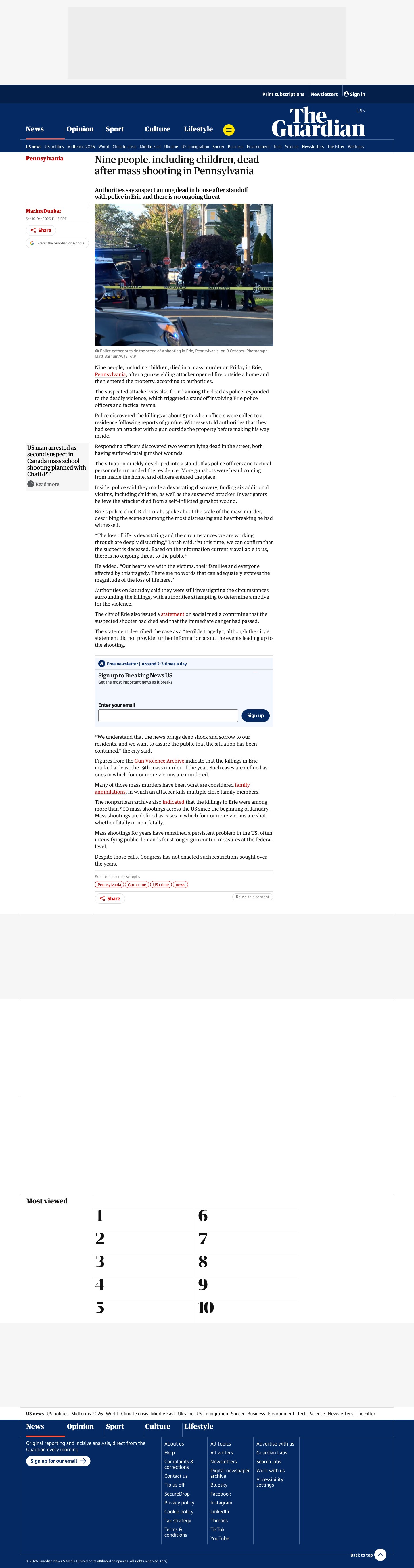
| tl;dr | The article reports nine deaths, including children and the suspected attacker, after a shooting and police standoff in Erie, Pennsylvania. Police found two women dead outside a home and six other victims inside, along with the suspect, who investigators believe died by suicide. Authorities said there was no ongoing public threat and that the motive remained under investigation. The report also cites Gun Violence Archive figures to place the killings in a national context. | ||||
| deeper: | The article mainly attributes claims to police and city officials, acknowledges the unknown motive, and advocates no political position. Emotional wording adds some dramatic emphasis. Named sources, quotations, and linked statistics strengthen the reporting, but independent corroboration is limited. The opening loosely describes all nine deaths as murder, although the reported breakdown includes the suspect’s apparent suicide. National shooting figures lack a definition of mass shooting, and the family-killing context could imply a connection not established here. The screenshots alone cannot verify the claims. | ||||
media: | |||||
| gen: 2026/10/07:16:32 in 25.8 sec (old)bias: 4 (Center-Left) |
| type: newsquality: 72 |
| pts: 0 |

 | author: | Emma Graham-Harrison and Quique Kierszenbaum | institution: | The Guardian | ¿porque no los dos? |
| tl;dr | The article follows October 7 survivors, including former hostages Keith and Aviva Siegel and Nir Oz resident Shlomo Margalit, as they cope with lasting trauma. It explores tensions between rebuilding communities and preserving memorials, alongside demands for an independent investigation into Israel’s security failures. The later sections examine criticism of Netanyahu’s leadership, the war’s Palestinian casualties, and election stakes. It concludes with Margalit’s call for secure coexistence with Palestinians. | ||||
| deeper: | Named interviews, detailed observations and attributed casualty records strengthen the reporting. Its sympathetic treatment of survivors is appropriate, not inherently partisan. The center-left framing emerges through emphasis on coexistence, Palestinian rights and democratic safeguards. However, phrases such as “rightwing vision of perpetual war” introduce editorial judgment, while substantial political accusations lack a government response. Palestinian casualty figures lack clear sourcing in the visible text. The 2026 third-anniversary framing also conflicts with a remaining “two years on” reference, raising an editing or chronology concern. | ||||
media: | |||||
| gen: 2026/09/22:06:03 in 27.6 sec (old)bias: 2 (Center) |
| type: newsquality: 70 |
| pts: 0 |
#football#extreme heat#athlete safety#artificial turf#nfl#eagles#titans#nashville#nissan stadium#extreme heat tee
 | author: | Guardian sport | institution: | The Guardian | ¿porque no los dos? |
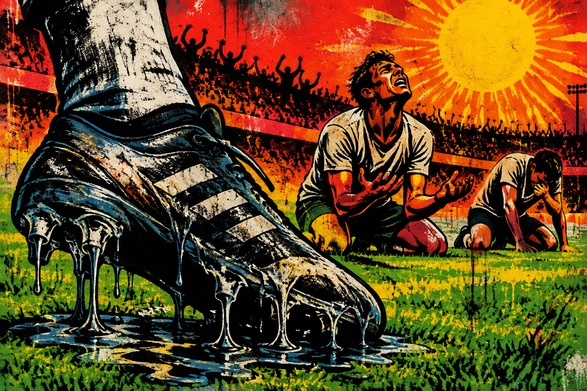
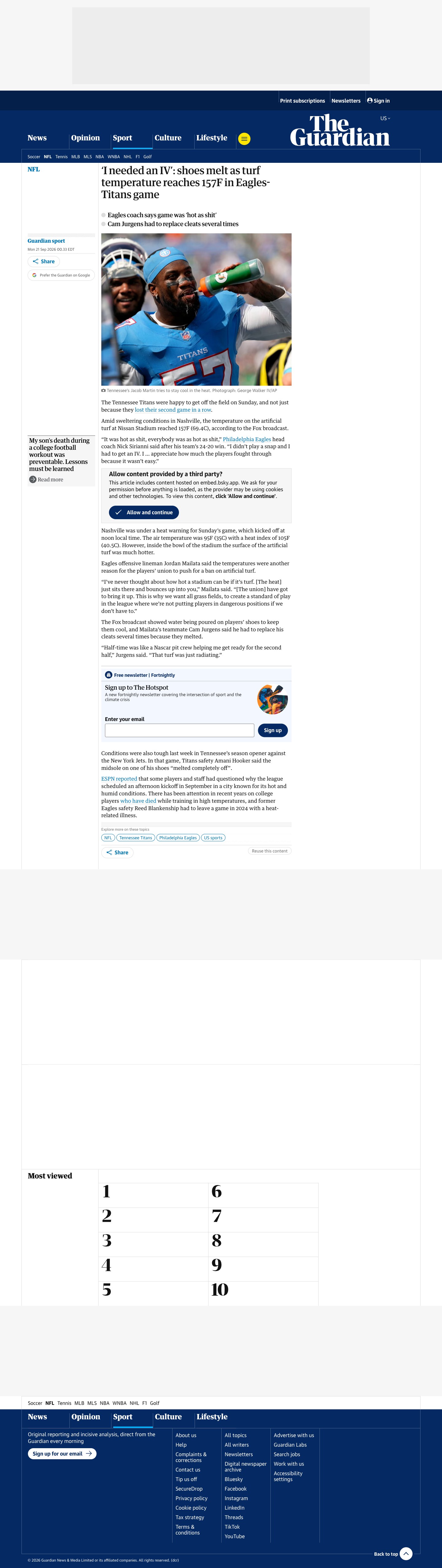
| tl;dr | The article reports extreme heat during an Eagles–Titans game in Nashville, with artificial turf reaching 157°F, according to Fox’s broadcast. Eagles coach Nick Sirianni said he needed an IV, while center Cam Jurgens reported replacing melted cleats several times. Air temperatures reached 95°F with a 105°F heat index. Jordan Mailata called for grass fields to improve player safety. The supplied images cut off the article’s final section. | ||||
| deeper: | The reporting uses named sources, direct quotations, and clearly distinguishes turf temperature from air temperature and heat index. Its dramatic headline emphasizes alarming details but reflects claims in the text. Coverage favors players’ safety concerns without a league or stadium response, independent temperature verification, or expert context about turf and footwear. No clear partisan position appears. The screenshot alone cannot establish authenticity or verify the reported event, and the ending is incomplete. | ||||
media: | |||||
| gen: 2026/09/22:06:02 in 24.3 sec (old)bias: 3 (Unknown) |
| type: newsquality: 65 |
| pts: 0 |

 | author: | Matt Hughes | institution: | The Guardian | ¿porque no los dos? |
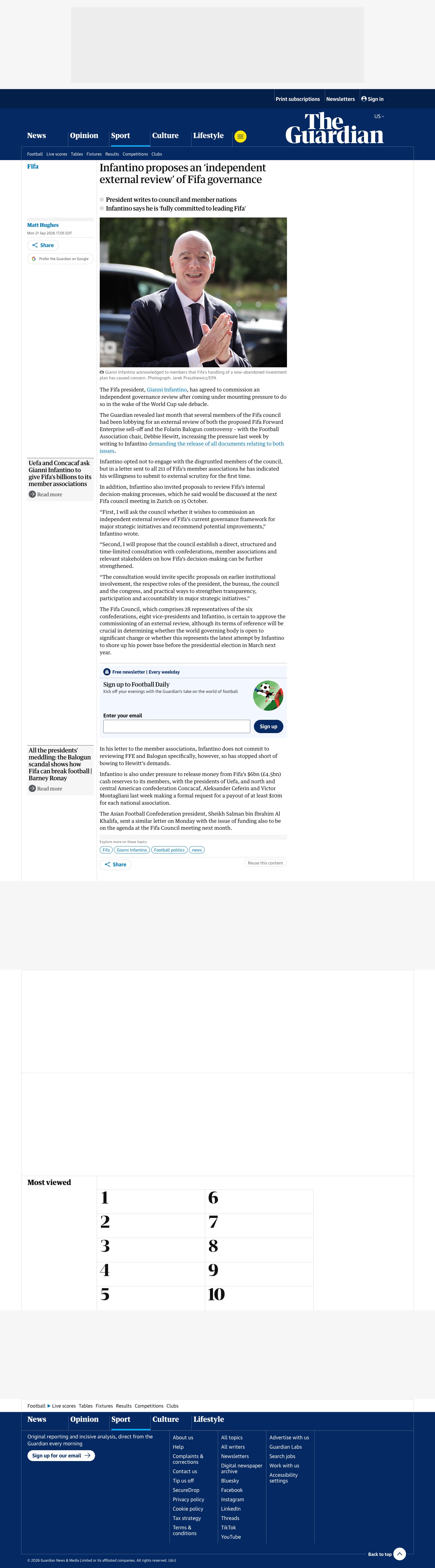
| tl;dr | Gianni Infantino proposes asking Fifa’s council to commission an independent governance review and consult members on decision-making reforms amid disputes over an abandoned investment plan and a controversy involving Folarin Balogun. The proposed review does not explicitly cover either dispute. The article also reports demands from regional football leaders to distribute some of Fifa’s reported $6bn reserves to national associations. | ||||
| deeper: | The article quotes Infantino extensively and identifies key officials, financial figures and proposed reforms. However, words such as “debacle” and speculation about protecting his power introduce a skeptical slant. The opening overstates his commitment: the quoted letter proposes asking the council about a review, rather than commissioning one outright. Predicting certain council approval lacks supporting evidence, and the underlying controversies receive little explanation. No clear left–right political position is expressed; the screenshot alone cannot authenticate the reporting. | ||||
media: | |||||
| gen: 2026/09/20:20:37 in 24.4 sec (old)bias: 3 (Center) |
| type: newsquality: 77 |
| pts: 0 |
 | author: | Shaun Walker | institution: | The Guardian | ¿porque no los dos? |
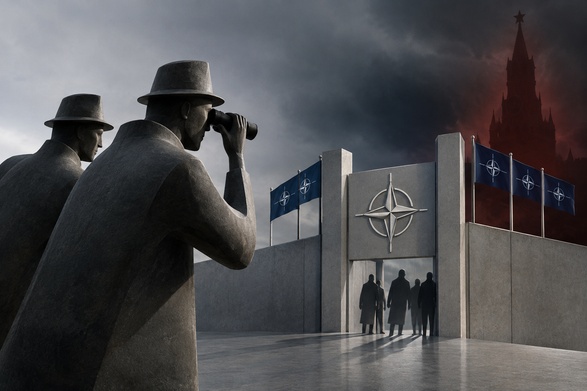
| tl;dr | European intelligence chiefs warn that Russia could intensify sabotage and potentially test Nato with limited military action within months. Baltic officials, however, report no signs of an imminent attack and caution that alarmist messaging could serve Moscow’s efforts to spread fear. Officials describe increasing threats to transport, defence industries and infrastructure supporting Ukraine. Russia denies planning an attack on Nato. The article also reports European doubts about Moscow’s commitment to peace negotiations, while acknowledging that the intelligence behind the warnings has not been disclosed. | ||||
| deeper: | The article prioritizes European security officials’ perspectives, but includes substantial disagreement, warnings against panic and Russia’s denial. Its framing does not clearly map onto left-right politics. Named interviews, direct quotations and historical context strengthen the reporting. However, the headline sounds more certain than the underlying assessments, and undisclosed intelligence prevents readers from testing the central claims. Some sweeping assertions, notably about destruction of Russian oil infrastructure, lack supporting figures. These scores assess the supplied text; the screenshot’s authenticity and reported events are not independently verified. | ||||
media: | |||||
| gen: 2026/09/18:18:45 in 36.9 secbias: 3 (Center) |
| type: colorquality: 72 |
| pts: 0 |
#us-foreign-polic#south-korea#iran-conflict#military-allianc#diplomatic-strat#south korea#lee jae myung#donald trump#iran#strait of hormuz#military policy
Leftist
This decision marks a bold stand for peace and sovereignty against yet another dangerous US initiative in the Middle East. South Korea is prioritizing its citizens’ will and rejecting military pressure from Trump’s imperialistic demands. History reminds us of the chaos that followed compliance in US-led wars. The refusal shows courage, thinking beyond capitalist interests and valuing diplomatic solutions. South Korea sets a precedent against warmongering empires, embodying globalization with empathy and peace.
Rightist
South Korea's decision smacks of a troubling defiance of global commitments. Trump’s stance was clear: allies must contribute to preserving regional stability and security. Turning away from this responsibility showcases a lack of strategic foresight. History warns us that appeasement risks emboldening adversaries like Iran. Economic interests are secondary to maintaining a strong defense posture. South Korea’s refusal could jeopardize relations and embolden rogue regimes, weakening alliances.
 | author: | Reuters | institution: | The Guardian | ¿porque no los dos? |
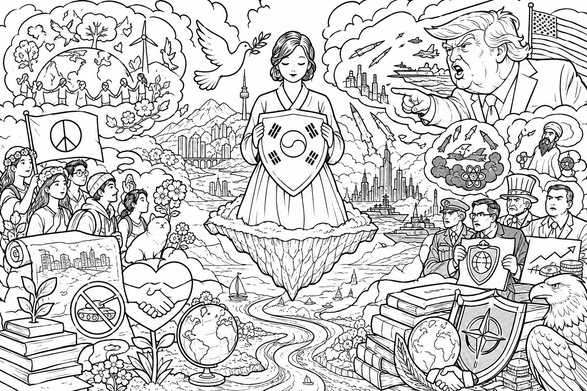
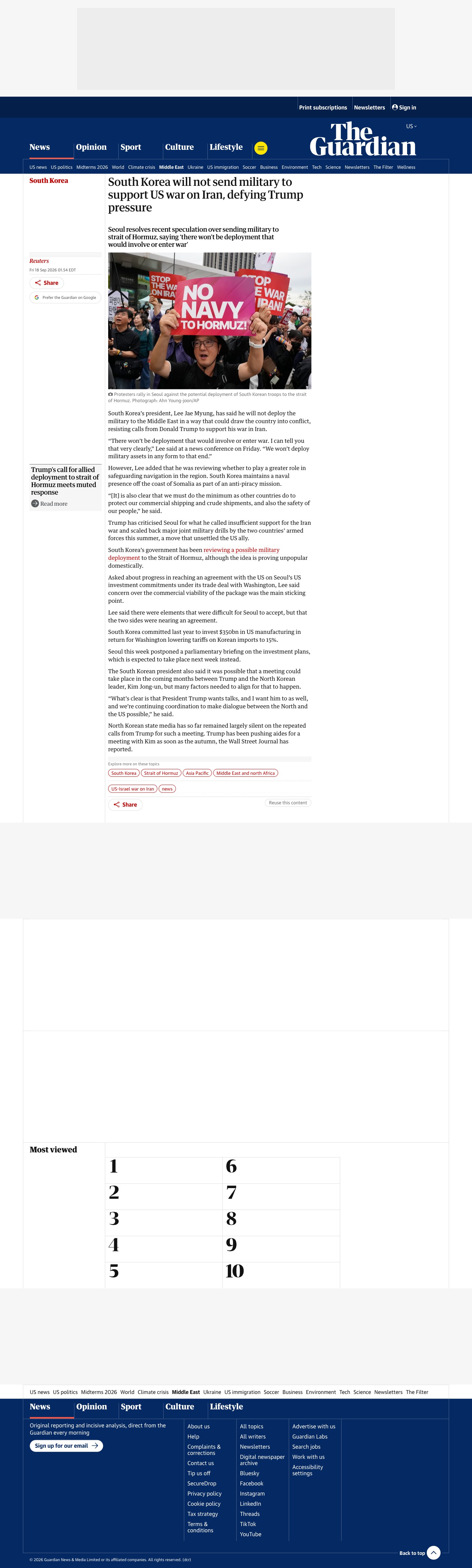
| tl;dr | South Korean president Lee Jae Myung says the country will not deploy forces in ways that would draw it into the Iran war, while considering measures to protect shipping and citizens. The article describes US pressure for support and domestic opposition to deployment. It also reports continuing negotiations over South Korea’s $350bn US investment commitment and the possibility of talks between Donald Trump and North Korean leader Kim Jong-un. | ||||
| deeper: | Direct quotations support the central account, and the article includes Lee’s willingness to protect shipping, adding nuance. However, the headline sounds more categorical than his qualified rejection of war-related deployments. “His war” and “defying Trump pressure,” alongside the protest photograph, emphasize confrontation. These choices do not establish a clear left-right ideology. Reporting relies heavily on Lee, without a direct US response or evidence quantifying domestic opposition. The screenshot’s authenticity and factual claims cannot be independently verified here, and the ending is cut off. | ||||
media: | |||||
| gen: 2026/09/16:05:23 in 32.0 sec (old)bias: 1 (Center) |
| type: lolsquality: 76 |
| pts: 0 |

 | author: | Uwa Ede-Osifo | institution: | The Guardian | ¿porque no los dos? |
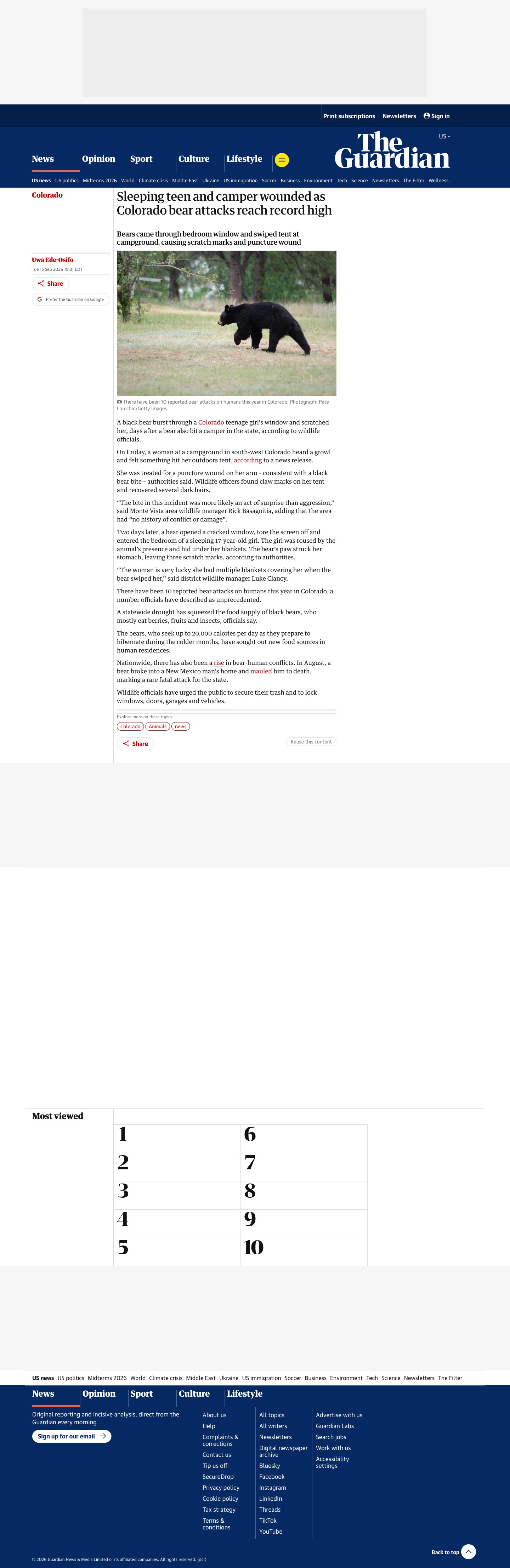
| tl;dr | The article reports two Colorado bear encounters that injured a camper and a sleeping 17-year-old girl. Wildlife officials say the state has recorded 10 bear attacks on humans this year, an unprecedented total. Officials link reduced natural food supplies to statewide drought and suggest the camper’s bite was a startled reaction rather than aggression. The supplied images end before the article’s final discussion is complete. | ||||
| deeper: | The reporting is largely factual, with named wildlife officials, attributed accounts and specific injury details. It shows no clear political agenda. The dramatic headline is tempered by an official’s explanation that one bite likely reflected surprise rather than aggression. Quality is limited by reliance on official sources and the absence of historical attack figures to substantiate the record-high claim. The drought explanation is attributed but not supported with additional data in the visible text. Assessment is limited to the supplied excerpt. | ||||
media: | |||||
| gen: 2026/09/16:05:20 in 32.3 sec (old)bias: 4 (Unknown) |
| type: lolsquality: 73 |
| pts: 0 |

 | author: | Joseph Gedeon | institution: | The Guardian | ¿porque no los dos? |
| tl;dr | The article reports that Donald Trump announced the Kennedy Center’s immediate closure and threatened to cancel a $257 million renovation unless courts permit his name on the building. Its board cites safety and financial concerns, while congresswoman Joyce Beatty and her lawyers dispute the safety justification and accuse leadership of mismanagement. The report describes court rulings reserving naming authority to Congress, competing legal filings, and claims of structural deterioration. | ||||
| deeper: | The report provides substantial direct quotations, named sources, legal context, and the board’s safety rationale. However, extended accounts of personal insults and strongly worded criticism give opponents disproportionate space. Phrases such as “dizzying legal dispute” add editorial color. This creates a critical framing without clearly affirming a left- or right-wing agenda. Independent assessment of structural safety and financial conditions is missing. The screenshots alone cannot verify the reported events, and the ending is cut off. | ||||
media: | |||||
| gen: 2026/09/16:05:17 in 37.9 sec (old)bias: 3 (Center) |
| type: lolsquality: 68 |
| pts: 0 |
 | author: | Agencies | institution: | The Guardian | ¿porque no los dos? |
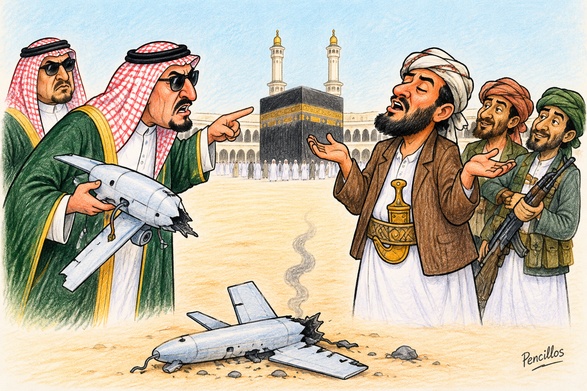
| tl;dr | Saudi Arabia says it intercepted a Houthi drone south of Mecca and warned that protecting holy sites and pilgrims is a “red line.” The Houthis deny targeting Mecca, while the Organisation of Islamic Cooperation condemned the alleged attack. The article also reports Saudi security alerts, a US travel advisory, and wider regional fighting affecting shipping and oil exports. It provides no independent evidence establishing the drone’s intended target. | ||||
| deeper: | The article attributes claims and prominently includes the Houthi denial, with no clear left-right political agenda. However, the headline and holy-site imagery emphasize the Saudi security narrative, while Saudi and allied statements receive more space. Named sources and regional context are strengths. Independent verification, precise interception details, and evidence of the intended target are missing. Some broader military and shipping claims receive little supporting detail, and the screenshot alone cannot establish authenticity or factual accuracy. | ||||
| gen: 2026/09/14:19:37 in 39.8 sec (old)bias: 3 (Center) |
| type: newsquality: 63 |
| pts: 0 |
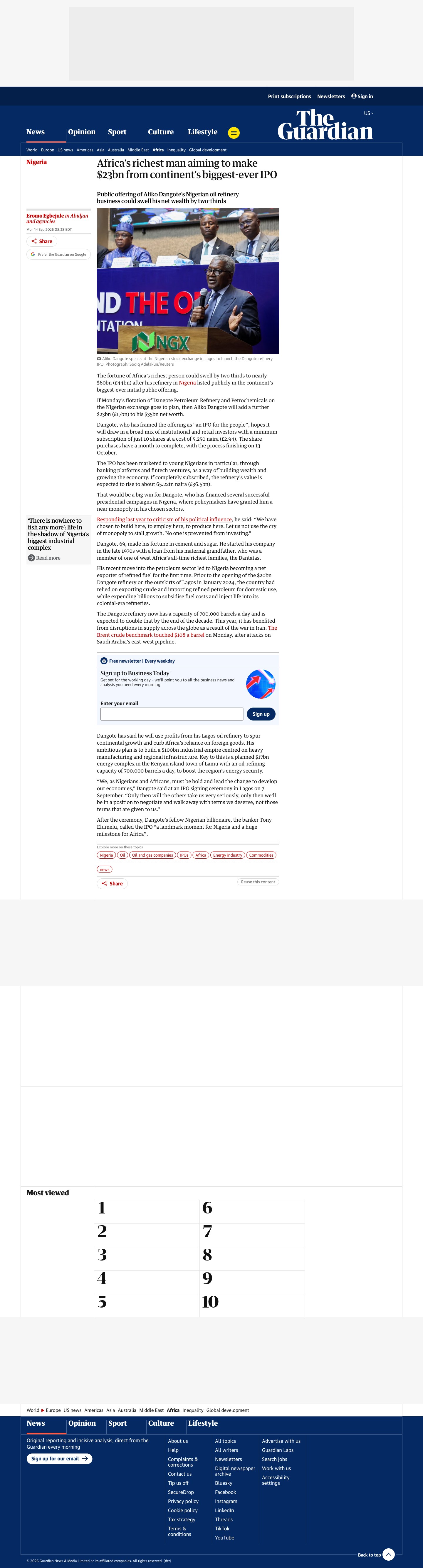 | author: | Eromo Egbejule and agencies | institution: | The Guardian | ¿porque no los dos? |
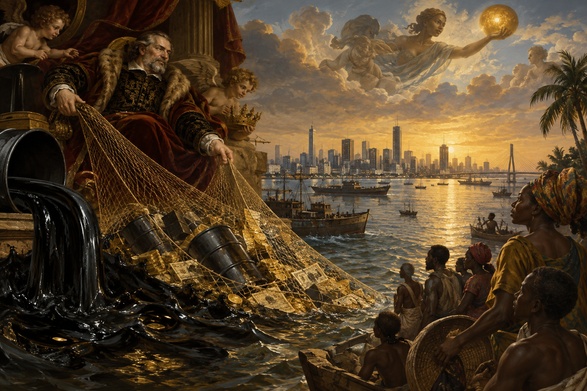
| tl;dr | The article reports that Aliko Dangote’s Nigerian refinery IPO could increase his estimated wealth by $23bn to nearly $60bn. It describes low minimum share purchases intended to attract ordinary investors and outlines the refinery’s role in African fuel production. It also examines Dangote’s political connections and monopoly concerns, includes his response, and details proposed industrial expansion into Kenya. The projected gains depend on the offering’s success. | ||||
| deeper: | The article balances economic benefits with scrutiny of political influence and includes Dangote’s defense, without a clear partisan position. However, quotations come from Dangote and a supportive billionaire, with no independent financial analysis. The headline’s claim that he could “make $23bn” blurs increased estimated wealth with cash proceeds. Major valuation projections lack a transparent calculation, and claims about political favors receive limited supporting detail. Clear writing and useful context help, but investor risks and the offering’s structure deserve greater scrutiny. | ||||
| gen: 2026/09/11:15:40 in 46.5 sec (old)bias: 3 (Center) |
| type: newsquality: 76 |
| pts: 0 |
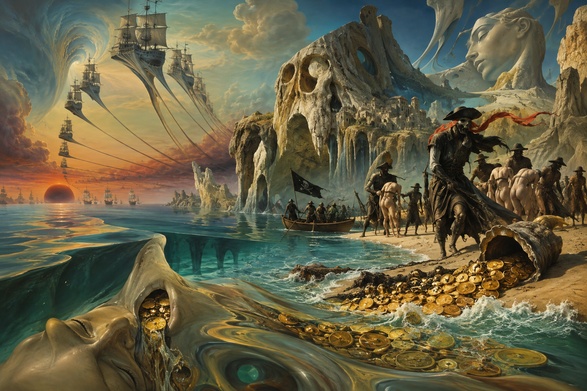
 | author: | Mohamed Gabobe and Peter Beaumont | institution: | The Guardian | ¿porque no los dos? |
| tl;dr | The article reports renewed Somali piracy, linking eight hijackings since late April to regional conflict, diverted naval resources, shipping-route changes and Somalia’s instability. It describes the Lutuf’s capture and release, an alleged $2.5 million ransom, and pirates’ use of captured ships and satellite internet. Experts warn that ransom payments finance further attacks and that international forces may lack the capacity for another large anti-piracy campaign. Lasting solutions, they argue, require addressing conditions on land. | ||||
| deeper: | The reporting provides historical context, named experts, local interviews and linked sources, without clearly endorsing a left- or right-wing agenda. Its security-focused framing and words such as “scourge” add some emotional weight. The headline presents the war’s causal role more firmly than the evidence establishes. Some claims rely on unnamed officials or analysts, and the initially attributed ransom payment later becomes an assumed fact. Shipping operators’ and affected crews’ perspectives are limited. The screenshots alone cannot establish authenticity or independently verify the reported events. | ||||
| gen: 2026/09/11:15:37 in 35.2 sec (old)bias: 3 (Center) |
| type: newsquality: 48 |
| pts: 0 |
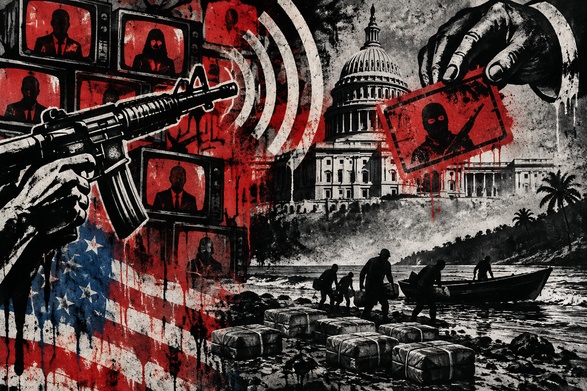
#ecuador#organized crime#terrorism#drug trade#us politics#los tiguerones#marco rubio#daniel noboa#donald trump#drug trafficking
| gen: 2026/09/11:15:31 in 45.9 sec (old)bias: 2 (Center) |
| type: newsquality: 83 |
| pts: 0 |
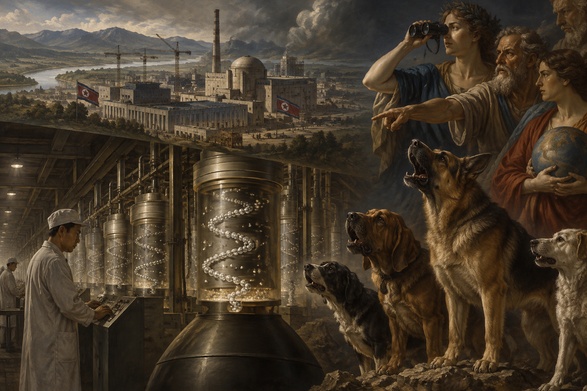
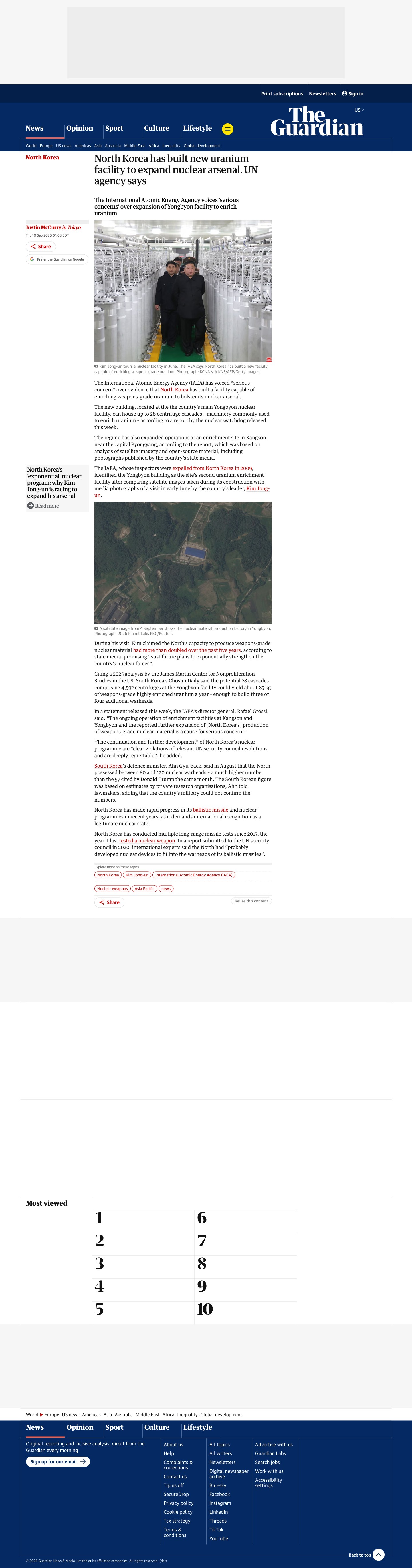 | author: | Justin McCurry | institution: | The Guardian | ¿porque no los dos? |
| tl;dr | The IAEA reports evidence of a new uranium-enrichment facility at North Korea’s Yongbyon complex and expanded operations at Kangson. Its assessment draws on satellite imagery and state-media photographs because inspectors have lacked access since 2009. A cited analysis estimates the new facility could produce enough weapons-grade uranium for three or four additional warheads annually. The article includes Kim Jong-un’s expansion claims, international concerns over UN resolution violations, and differing, unconfirmed estimates of North Korea’s existing arsenal. | ||||
| deeper: | The article is primarily factual reporting, with clear attribution, technical details, historical context, and explicit caveats about arsenal estimates and inspection limits. Its security-focused framing privileges the IAEA’s concerns, while wording such as “regime” adds a mildly negative tone. Kim’s statements are included, though not a direct response to the report. The headline presents the facility’s purpose more conclusively than the indirect evidence warrants. There is no clear left-right advocacy. Production estimates come through secondary reporting rather than direct expert interviews. | ||||
| gen: 2026/09/09:15:27 in 44.7 sec (old)bias: 4 (Center-Left) |
| type: newsquality: 78 |
| pts: 0 |

#russia#north korea#infrastructure#geopolitics#war#northkorea#tumenriver#khasan#tumangang#bridgeopening1st

| gen: 2026/09/08:23:37 in 1 min 10.8 secbias: 6 (Center-Left) |
| type: colorquality: 78 |
| pts: 0 |

Leftist
The UK finally calls out Israel for its inhumane actions in the West Bank, holding Netanyahu accountable for blatant ethnic cleansing. The long-overdue sanctions signal a shift towards justice and human rights. It's a courageous move against oppressive settler violence, echoing the cries of displaced Palestinians. The world must recognize their suffering, and Britain's bold stance is a beacon of hope for peace and equality in the Middle East. Solidarity now!
Rightist
Here's the UK meddling again, imposing its will on a sovereign state. Accusing Israel of ethnic cleansing disregards their right to defend their land. These sanctions are a leftist overreach, attacking a critical ally while emboldening hostility. Israel's actions ensure security and peace, and undermining this with baseless accusations threatens stability. Yet again, Britain's proving it's lost its way in the global political arena.

| gen: 2026/09/07:22:34 in 34.3 sec (old)bias: 3 (Center) |
| type: newsquality: 84 |
| pts: 0 |

 | author: | Guardian staff and agencies in Vienna | institution: | The Guardian | ¿porque no los dos? |
| tl;dr | The Guardian reports that a nearly completed nuclear reactor built secretly under Syria’s Assad-era government could have produced fissile material usable for nuclear weapons, according to IAEA chief Rafael Grossi. The article says IAEA inspectors recently visited sites including Deir ez-Zor and a previously undisclosed location, finding infrastructure consistent with a reactor and verifying about 73 tonnes of natural uranium metal in fuel-rod form. It notes the material is now under IAEA safeguards with cameras installed, and discusses options and security risks around potential removal or disposition. | ||||
| deeper: | The piece is largely anchored in attributable sources (IAEA chief statements and an IAEA report seen by AP) and uses cautious language (“could have been used”) rather than asserting certainty. It presents a clear nonproliferation frame and emphasizes clandestine activity, with limited representation of Syrian official explanations beyond cooperation language, so the narrative leans toward watchdog/Western intelligence-era claims but not in a sensational way. Quality is strong due to specific technical details (reactor type implications, quantity and form of uranium, safeguards) and multiple referenced institutions, though it relies heavily on official/agency sourcing and provides limited independent verification context. | ||||
| gen: 2026/09/07:22:31 in 34.8 sec (old)bias: 5 (Center-Left) |
| type: newsquality: 78 |
| pts: 0 |
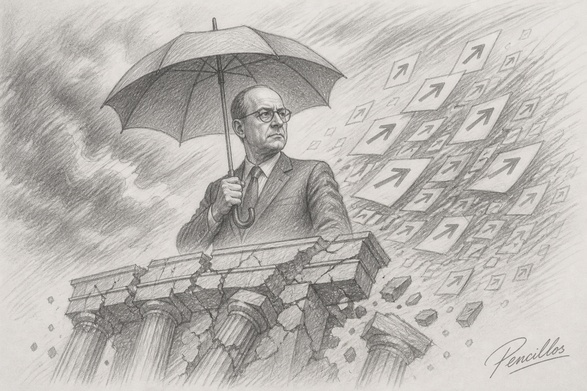
 | author: | Deborah Cole | institution: | The Guardian | ¿porque no los dos? |
| tl;dr | The article reports that German chancellor Friedrich Merz intends to remain in office after the AfD won a landslide in Saxony-Anhalt (about 44%). It describes the defeat as a major shock for Merz’s CDU, cites exit-poll evidence of very low approval for Merz, and outlines how coalition partners and commentators are reacting. It also summarizes AfD positions (immigration, public broadcasting, Russia/Ukraine) and notes concerns about extremist classification, potential coalition arithmetic, and alleged Russian interference ahead of further regional elections. | ||||
| deeper: | The reporting is largely factual (results, quotes, polling) but uses loaded descriptors (“far-right triumph,” “nativist,” “ash(en)-faced,” “fragrance salesman”) that signal a skeptical, alarmed framing toward AfD and a personalizing tone toward its candidate. It includes multiple viewpoints (Merz, critics, coalition partner, intelligence-service designation) but gives comparatively limited space to AfD voters’ policy motivations beyond grievance/identity themes. Quality is solid: clear narrative, relevant context, and specific figures; weaker on sourcing detail for some claims (e.g., interference allegations) and on distinguishing analysis from description. | ||||
| gen: 2026/09/07:22:29 in 35.2 sec (old)bias: 2 (Center) |
| type: newsquality: 78 |
| pts: 0 |




owned and operated by: RPN Omnigalactic Insitutution as of: 2026/10/15: 00:09 in 0 ms
Enter Code
Login with Account